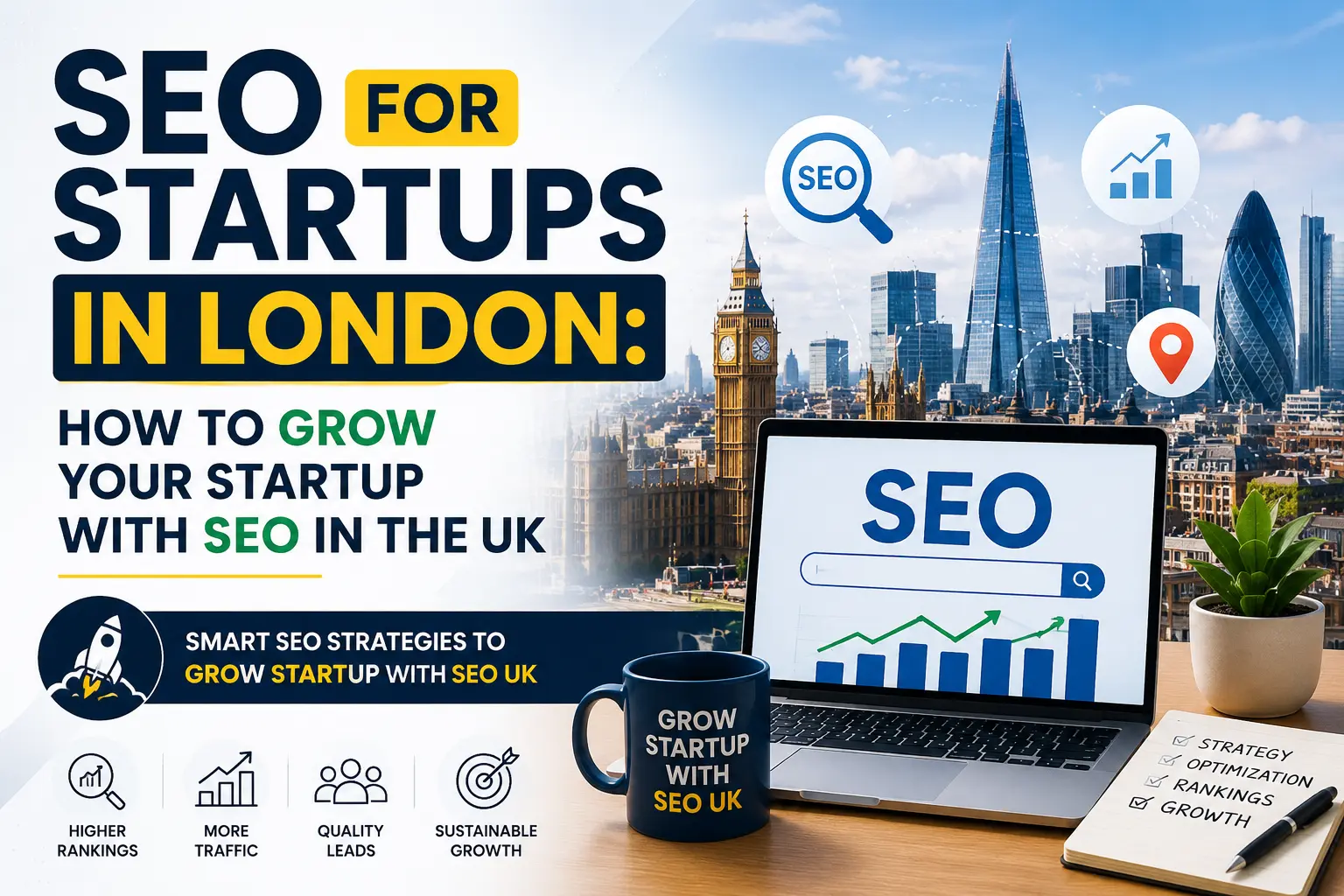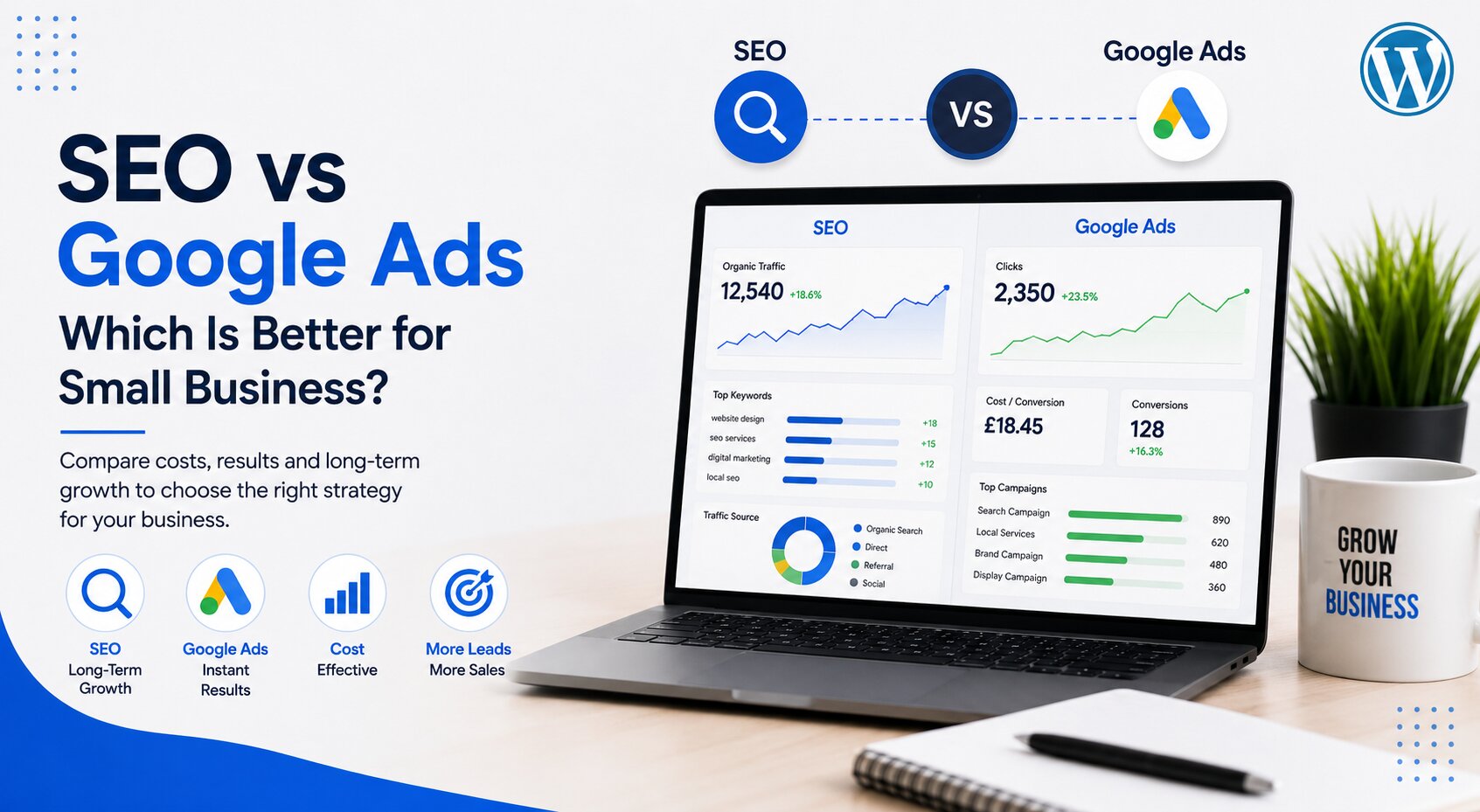
Choosing between SEO vs Google Ads can be difficult for a small business. Both can help you attract potential customers, increase website traffic and generate enquiries, but they work in very different ways. SEO focuses on improving your organic visibility over time, while Google Ads can place your business in front of potential customers almost immediately. If you’re a newer business, our guide to SEO for startups in London explains how SEO can support sustainable growth.
So, SEO vs Google Ads — which is better for small business? The answer depends on your goals, budget, competition and how quickly you need results. In many cases, using both together can create a stronger and more sustainable digital marketing strategy.
What Is SEO?
Search Engine Optimisation (SEO) is the process of improving your website so that it can appear more prominently in organic search results on Google and other search engines.
For example, if you run a local plumbing company in London, you may want your website to appear when someone searches for terms such as “plumber in London” or “emergency plumber near me”.
SEO can involve:
- Optimising website pages and content
- Improving technical website performance
- Creating useful blog content
- Building relevant backlinks
- Optimising Google Business Profile
- Improving local search visibility
- Targeting relevant keywords
Unlike paid advertising, you don’t pay Google every time someone clicks your organic listing. However, SEO requires consistent work and patience because rankings generally take time to develop. For a more detailed look at the technical side of SEO, you can also explore our technical SEO checklist for websites.
What Are Google Ads?
Google Ads is Google’s paid advertising platform. It allows businesses to create advertisements that can appear when people search for relevant keywords.
For instance, a business selling web design services could create an advert targeting searches such as “web design company London”. If the campaign is properly targeted and the bid is competitive, the advert can appear near the top of the search results.
Google Ads can be useful when you want to:
- Generate traffic quickly
- Promote specific services
- Target high-intent searches
- Test new markets or keywords
- Generate enquiries and sales
- Control advertising budgets
However, Google Ads works on an ongoing advertising budget. Once you stop paying for your campaigns, your paid visibility normally stops as well.
SEO vs Google Ads: The Main Differences
Although both strategies aim to bring potential customers to your website, the way they achieve this is different.
| SEO | Google Ads |
| Organic search visibility | Paid search visibility |
| Usually takes longer to build | Can generate visibility quickly |
| Results can continue after optimisation | Traffic generally stops when campaigns stop |
| Requires ongoing optimisation | Requires ongoing advertising budget |
| Builds long-term search visibility | Useful for immediate campaigns |
| Strong for content and local search | Strong for targeted, high-intent searches |
This is why small businesses should not automatically choose one strategy without considering their specific goals.
SEO vs Google Ads: Which Is More Cost-Effective?
Cost is one of the biggest considerations for small businesses.
SEO does not charge you for every organic click, but that doesn’t mean SEO is free. You may need to invest in content, technical optimisation, local SEO, link building and professional expertise.
Google Ads, on the other hand, allows you to set an advertising budget and pay when users interact with your adverts, depending on your campaign settings.
For a business with a limited budget, SEO can provide strong long-term value because a well-optimised page can continue attracting organic visitors after the initial work has been completed.
However, Google Ads can be valuable when a business needs leads quickly and has a suitable budget to support the campaign.
Which Gives Faster Results?
If speed is your priority, Google Ads generally has the advantage.
Once your campaign is properly set up, your adverts can start appearing for relevant searches. This makes paid advertising useful for new businesses, seasonal promotions, special offers and services that need immediate exposure.
SEO takes longer because search engines need to discover, evaluate and rank your website and its content. Therefore, businesses should view SEO as a long-term investment rather than a quick solution.
That doesn’t make SEO less valuable. In fact, its long-term nature is one of its biggest advantages.
Which Is Better for Long-Term Growth?
For long-term organic growth, SEO is usually the stronger option.
A successful SEO strategy can help your website build authority, attract relevant visitors and increase visibility for multiple keywords. As your website gains more useful content and stronger search visibility, it can potentially attract customers without paying for every individual click.
For example, a small business could create service pages targeting important locations and publish helpful articles that answer common customer questions. Over time, these pages can support the overall organic visibility of the website.
However, SEO still needs regular monitoring because competitors, search behaviour and Google’s algorithms can change.
How a Digital Marketing Agency UK Can Help
Managing SEO and Google Ads can become difficult when you’re running a small business. A digital marketing agency UK can help you decide where your budget is likely to have the greatest impact.
A professional team can analyse your:
- Current website performance
- Organic search visibility
- Competitor activity
- Target keywords
- Google Ads opportunities
- Local search presence
- Conversion performance
Instead of simply spending more money, the aim should be to identify which channels can generate relevant traffic and enquiries for your particular business.
Should Small Businesses Use SEO and Google Ads Together?
In many cases, yes.
SEO and Google Ads can complement each other rather than compete with each other.
For example, Google Ads can help you generate immediate traffic while your SEO strategy develops. At the same time, your SEO campaign can work towards building sustainable organic visibility that may reduce your dependence on paid advertising in the long term.
Google Ads can also provide useful information about which keywords and messages attract clicks and conversions. These insights can help inform your wider marketing strategy.
Therefore, instead of asking only “SEO vs Google Ads — which is better?”, consider asking:
“How can SEO and Google Ads work together to grow my business?”
SEO or Google Ads: Which Should Your Business Choose?
The right choice depends on your situation.
Choose SEO if:
- You want sustainable organic growth
- You want to build long-term visibility
- You operate in a competitive local market
- You regularly publish useful content
- You want to reduce reliance on paid traffic over time
Choose Google Ads if:
- You need traffic and enquiries quickly
- You have a defined advertising budget
- You want to promote a specific service
- You want to test keywords or markets
- You have a strong landing page and conversion process
And if your budget allows, combining both can provide a balanced approach.
Final Thoughts
There is no universal winner when comparing SEO vs Google Ads. Google Ads can provide faster visibility, while SEO can build long-term organic growth and authority. For many small businesses, the best strategy is to use paid advertising for immediate opportunities while investing in SEO for sustainable growth.
The most important step is to understand your target audience, competition, budget and business goals before choosing where to invest. With the right strategy, both SEO and Google Ads can become valuable parts of a successful digital marketing campaign.